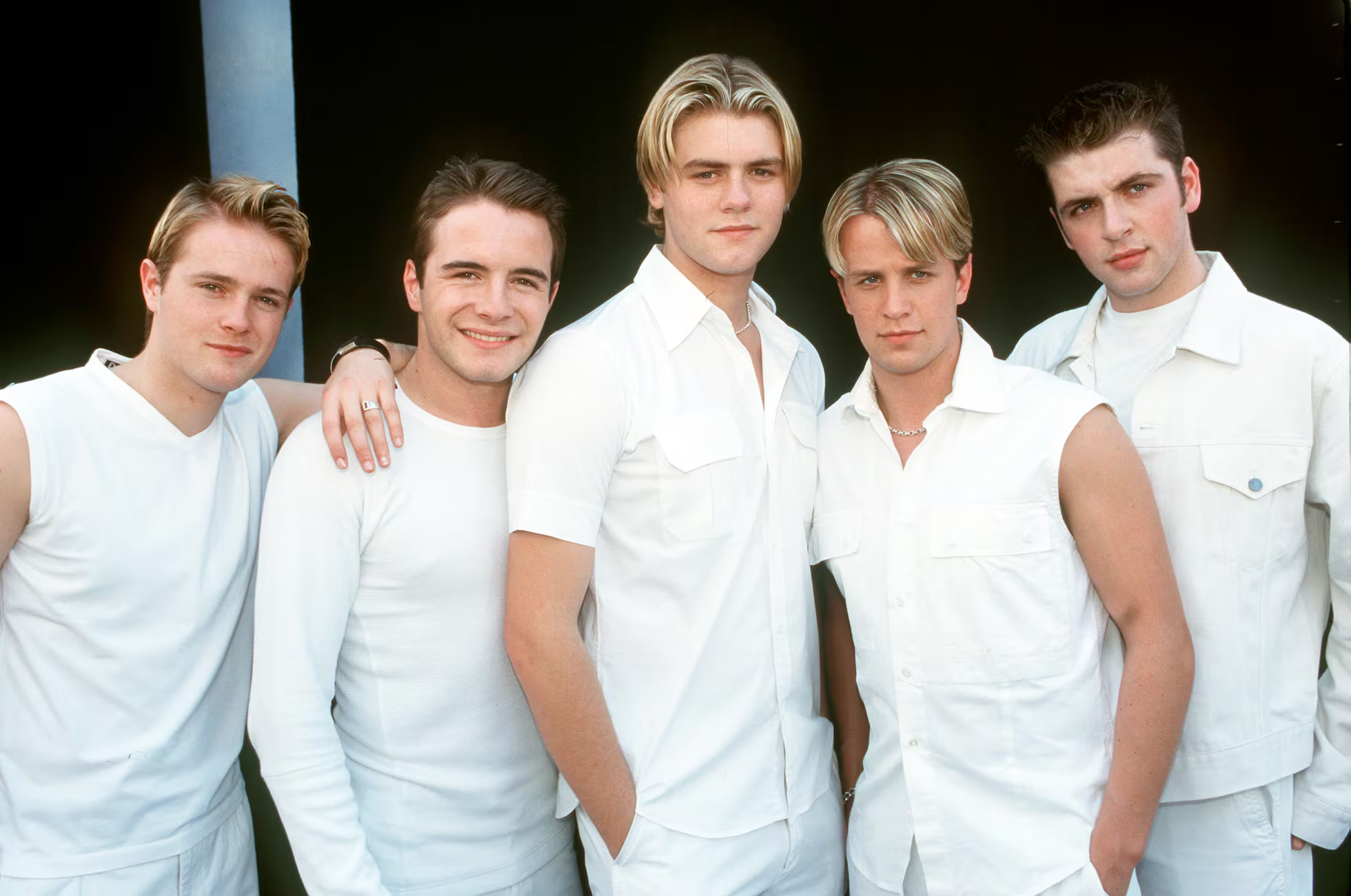
For more than two decades, Westlife has been synonymous with soaring harmonies, arena-shaking key changes and a brand of earnest pop balladry that defined an entire era. Yet behind the polished vocals and immaculate stagecraft lay a story far more complicated—a story of burnout, financial strain, personal hardship and an industry that is rarely kind to artists who grow older.
Today, after years spent rebuilding their lives both personally and professionally, Westlife stands on the cusp of a new chapter. Their latest announcement—a new global tour and a long-anticipated studio album—marks not just a comeback, but a renewal rooted in lessons learned from their darkest seasons.
A Meteoric Rise That Became Unsustainable
When Westlife burst onto the scene in the late 1990s, they were a phenomenon. With chart-topping singles arriving in rapid succession, they became one of the most commercially successful boybands of their generation. Yet the very speed of their success planted the seeds for future crises.
Touring schedules were relentless. Public expectations were suffocating. And as social media emerged, the aura that once protected pop stars from scrutiny evaporated, leaving the members vulnerable to public commentary and private pressure.
As the group expanded globally, its members juggled fame with the ordinary demands of early adulthood—families, finances, identity and emotional wellbeing.
Financial Turbulence and the Cost of Fame
It’s no secret that the music industry can be ruthless, especially for artists who rely on touring and royalties from older catalogs. Individual members of Westlife have spoken candidly over the years about financial mistakes, failed business ventures and the challenges of sudden wealth followed by periods of instability.
While not every member faced bankruptcy, the band as a whole confronted the harsh reality of a maturing market and a shifting industry, where digital streaming altered revenue models and nostalgia became both a blessing and a trap. The collapse of certain investments and the high operating costs of arena-level production further strained their resources.
Their eventual hiatus was not only emotional—it was financial. The break allowed them to reassess their relationship with money, fame and the business side of the industry that had once carried them.
Mental Health: The Silent Battle Behind the Curtain
Perhaps the most profound challenges the group faced were personal. Several members have openly discussed their struggles with anxiety, depression and the emotional toll of decades spent under public scrutiny.
In the early 2000s, mental health was rarely acknowledged in the entertainment world. Boyband culture demanded optimism, approachability and perfection; vulnerability was neither encouraged nor understood.
With time, therapy, family support and shifting societal attitudes, the members began to confront the cost of suppressing their psychological wellbeing. Their reunion in recent years was made possible not by nostalgia alone, but by a newfound commitment to healthier boundaries, emotional honesty and mutual support.
Fading From the Spotlight—And Finding Themselves Again
When the group briefly disbanded, each member faced the question that haunts many long-time performers: Who am I without the band?
Some pursued solo music. Others stepped into business, broadcasting or family life. The absence of constant public attention forced them to rediscover identity, purpose and passion outside the Westlife brand.
In hindsight, those quieter years were not a fall from grace but a recalibration—one that laid the foundation for where they are now.
The Comeback That Almost Didn’t Happen
Westlife’s return to the stage was not inevitable. It required healing old wounds, rebuilding trust and negotiating a shared vision for the future. Their reunion performances—met with sold-out arenas and overwhelming public affection—proved that time had only deepened the connection between the band and their fans.
What makes this comeback remarkable is not merely the scale of their renewed success, but the maturity and authenticity that now accompany their music. They are no longer the polished boyband of the millennium; they are seasoned performers with real stories and real scars.
…And Now, a New Era Begins
This week, Westlife announced what fans worldwide had long suspected: a brand-new album paired with an international tour, their most ambitious project since the early 2010s. Though details remain closely guarded, insiders describe the album as their most personal yet—an exploration of resilience, brotherhood and transformation.
The tour, slated for multiple continents, will blend their classic hits with a modern production aesthetic that reflects both where they came from and where they’re going next.
A Legacy Rewritten
Westlife’s story is no longer just about chart positions or record-breaking singles. It’s about survival—financial, emotional and artistic. Their return is a testament to what happens when a band chooses vulnerability over image, growth over nostalgia and authenticity over commercial formulas.
As they step back into the international spotlight, Westlife is not simply reliving past glory—they are redefining it, proving that second acts can be richer, deeper and more inspiring than the first.
Their comeback isn’t just a headline.
It’s a reminder that even after the music fades, a new song can always begin.
If you’d like, I can also create:
A shorter news-style version
A punchier magazine feature
A dramatic opening paragraph
Social media captions or promo text
Just tell me what you need!