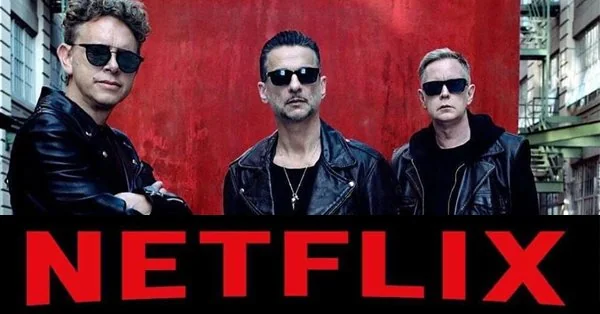
Netflix has ignited a storm of debate and excitement across the music world with the release of the first official trailer for its upcoming Depeche Mode documentary, slated for release in 2026. In just under three minutes, the trailer promises a raw, unfiltered look into one of the most influential and enigmatic bands in modern music history—while teasing revelations that could permanently reshape how fans understand the group’s legacy.
From the opening seconds, it’s clear this documentary will not be a standard career retrospective. Instead of glossy montages and celebratory narration, the trailer opens with grainy backstage footage, long silences, and fragmented voiceovers that hint at decades of tension, emotional wounds, and buried truths. The message is unmistakable: this is Depeche Mode as the world has never seen them before.
A Darker, More Intimate Portrait
Titled From Silence to Confession (working title), the documentary appears to dive deep into the personal and professional struggles that defined Depeche Mode’s journey from underground electronic pioneers to global icons. The trailer weaves together unseen archival footage, candid studio moments, and present-day interviews that feel less like press appearances and more like therapy sessions.
Dave Gahan’s voice—quiet, reflective, and at times trembling—anchors much of the trailer. “There were moments we didn’t think we’d survive,” he says, as the screen cuts to black-and-white footage of empty hotel corridors and chaotic tour buses. For longtime fans, the implication is chilling, suggesting that the band’s survival was never guaranteed.
Martin Gore, typically more reserved in public, appears unusually open. In one striking clip, he admits, “We wrote songs about pain because we didn’t know how else to talk about it.” The line alone has sent fans into intense speculation about which songs—and which moments in the band’s history—will be reexamined under this brutally honest lens.
Secrets Long Whispered, Now Spoken Aloud
What has made the trailer especially controversial is its clear suggestion that long-rumored conflicts and personal demons will finally be addressed head-on. Without explicitly naming names or incidents, the preview hints at fractured relationships, creative power struggles, and the emotional fallout of fame.
Quick cuts show tense studio arguments, doors slamming, and band members sitting apart during interviews—visual cues that something deeper lies beneath the surface. One particularly shocking moment features an unidentified voice saying, “We nearly lost everything… and almost lost each other.” The ambiguity has only fueled online debate, with fans dissecting every frame in search of clues.
Perhaps most provocative is the suggestion that the documentary will explore how grief and tragedy shaped the band’s identity, not just musically but emotionally. The trailer briefly references “loss that never healed,” a line many interpret as pointing to moments the band has rarely discussed publicly.
Fans Divided: Excitement vs. Fear
Within hours of the trailer’s release, social media exploded. Longtime Depeche Mode fans expressed a mix of anticipation and anxiety. For some, the promise of honesty and vulnerability is long overdue—a chance to finally understand the human cost behind the band’s dark, emotionally charged music.
Others, however, worry that the documentary could cross a line, exposing private pain for dramatic effect. “Depeche Mode’s mystery is part of their magic,” one fan wrote online. “Do we really need to see everything laid bare?”
Netflix, no stranger to provocative music documentaries, appears fully aware of the risk. A brief end card in the trailer reads: “This is not a celebration. This is the truth.” That statement alone has intensified the controversy, positioning the film as a confessional rather than a tribute.
A Redefining Moment for the Band’s Legacy
Industry insiders suggest the documentary could become a defining cultural moment—not just for Depeche Mode, but for how legendary bands confront their past in the streaming era. Rather than preserving a polished image, the film seems intent on challenging the myth, revealing the fragile humanity behind the iconography.
The timing is also significant. With 2026 already rumored to be a monumental year for the band—filled with speculation about tours, releases, and possible farewells—the documentary may serve as both reflection and reckoning. It invites fans to look back, not with nostalgia alone, but with empathy and understanding.
What Awaits in 2026
While Netflix has yet to confirm a precise release date, the trailer makes one thing clear: this documentary will not be comfortable viewing. It promises moments of revelation, heartbreak, and perhaps even redemption—forcing audiences to confront the cost of artistic brilliance.
As the final shot fades out, Dave Gahan’s voice returns one last time: “If we’re telling this story now, it’s because we finally can.” It’s a line that lingers long after the trailer ends, leaving fans both eager and uneasy about what’s to come.
One thing is certain: when the Depeche Mode documentary arrives in 2026, it won’t just revisit history—it will rewrite how that history is understood, leaving fans shocked, moved, and forever changed.