In the high-stakes world of the Premier League, where every decision can swing titles, careers, and club fortunes, few moments spark as much outrage as a controversial red card.
On Monday night at Old Trafford, Manchester United suffered a heartbreaking 2-1 defeat to Leeds United, but the result was overshadowed by a sending-off that has dominated headlines, social media debates, and pundit panels ever since.
Lisandro Martínez, the Argentine defender known for his no-nonsense style and passionate play, was dismissed in the 54th minute for violent conduct after a VAR review spotted him pulling the hair of Leeds striker Dominic Calvert-Lewin during an aerial duel.
The incident happened in a flash: Martínez and Calvert-Lewin leaped for a header, and as they came down, the United No. 6 grabbed a handful of the forward’s ponytail.

Referee Paul Tierney initially missed it, but VAR intervened, sending Tierney to the monitor. After review, the red card was brandished. Manchester United, already struggling, went on to lose despite a valiant effort, with goals from Leeds proving decisive.
The fallout was immediate—fans, players, and coaches erupted in disbelief. But now, the Premier League has stepped in with an official statement that leaves no room for ambiguity: they fully accept and stand by the referee’s decision.

### The Incident That Ignited the Firestorm
Let’s rewind to the moment itself. With the score level or United chasing the game (depending on the exact timeline), a routine set-piece or long ball led to the clash. Martínez, ever the competitor, went full throttle in the challenge.
What followed was a momentary tug—visible in slow-motion replays but arguably fleeting in real time. Pundits were split instantly. Sky Sports’ Michael Carrick, stepping in as interim or analyst, called it “one of the worst decisions I’ve seen,” labeling it shocking and disproportionate.
Jamie Carragher echoed the sentiment on air, arguing “no fan thinks that’s a red card.” Even Charlie Austin weighed in, insisting there was “no intent” and questioning the violent conduct classification.
On the other side, Roy Keane—never one to shy away from tough calls—admitted he could see both arguments but ultimately backed the decision. “It feels really harsh,” Keane said on Monday Night Football, “but we’ve seen other players getting sent off. If that’s the law of the game, then you have to accept it.”
Social media exploded, with #MartinezRed trending alongside memes, conspiracy theories about VAR bias against United, and heated debates about consistency in refereeing.
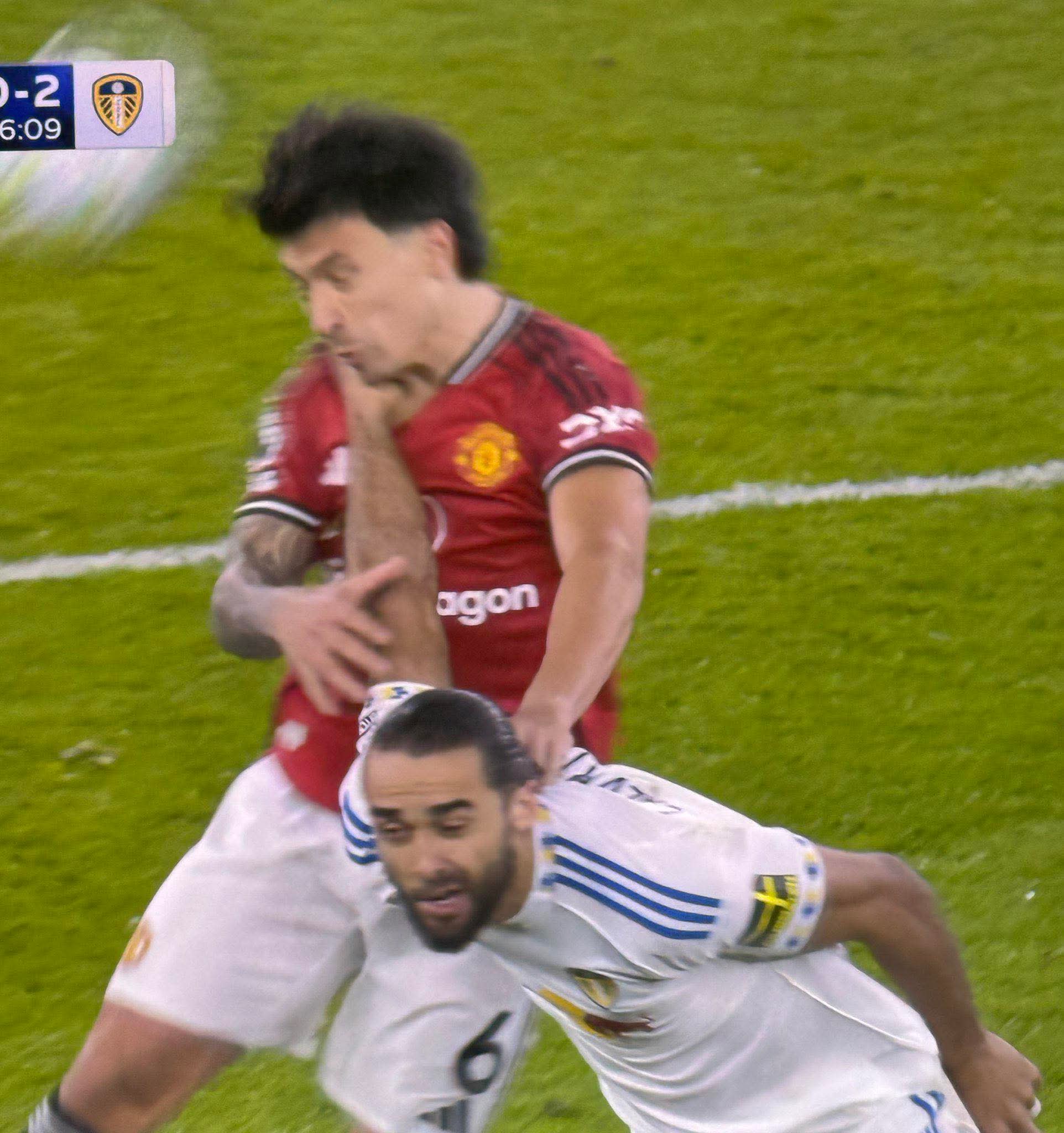
The context matters here. Manchester United entered the fixture amid a turbulent season, and a loss to their Yorkshire rivals—especially one compounded by a red card—felt like salt in the wound. Martínez has been a fan favorite since his arrival, prized for his intensity and leadership at the back. Losing him for what many viewed as a split-second lapse in a physical battle seemed cruel, especially when similar incidents (or worse) have sometimes gone unpunished in prior seasons.
### Premier League’s Official Statement: Clarity and Acceptance of the Referee’s Call
Enter the Premier League Match Centre, which moved quickly to issue a detailed official statement clarifying the ruling. Posted across their channels and picked up by major outlets, the statement reads:
“#MUNLEE – 54’ VAR OVERTURN
After VAR review, the referee issued a red card to Martínez for violent conduct.
Referee announcement: ‘After review, Manchester United 6 is guilty of pulling his hair – violent conduct. Final decision is red card.’”
This wasn’t a vague press release or a deflection. It was a direct endorsement of Paul Tierney’s on-field decision post-VAR. The Premier League explicitly accepted the referee’s judgment, framing the hair pull as meeting the threshold for violent conduct under current laws. No appeal window was hinted at in the statement itself (though clubs can appeal suspensions separately), and the tone was matter-of-fact: the laws were applied correctly, end of discussion.
Why such a firm stance? It ties directly to updates in the 2025-26 Premier League handbook. Following a string of high-profile hair-pull incidents in previous campaigns, the league introduced explicit guidance: players “will be sent off if they are clearly pulling the hair of an opponent with force.” The VAR review deemed this exactly that—a clear, forceful pull. The Premier League’s statement reinforces that the referee, after consultation with technology, got it right. In an era where officiating is under constant scrutiny, this transparency from the governing body signals consistency. They’re not hiding behind bureaucracy; they’re publicly backing the officials to maintain the integrity of the competition.
Critics might argue the statement feels defensive, especially given the backlash. But from the league’s perspective, it’s about upholding standards. Violent conduct has long been a straight red, and hair-pulling—once a grey area—has been clarified to protect player safety and deter cynical play. The Premier League isn’t just accepting the decision; they’re owning it as the correct application of the rules.
### What This Means for Manchester United and the Bigger Picture
The consequences are immediate and painful for United. Barring a successful appeal, Martínez faces a three-match ban, sidelining him for key fixtures against Chelsea, Brentford, and Liverpool. That’s a massive blow to a defense already stretched thin. Michael Carrick’s post-match comments hinted at frustration not just with the call but with the broader impact on the team’s campaign. Leeds, meanwhile, will pocket the three points and head into their next matches with momentum, proving once again that derbies against United bring out the best (and the controversy) in them.
Broader implications ripple across the league. This episode reignites debates about VAR’s role: is it making the game fairer, or turning it into a pedantic courtroom? Pundits have pointed out inconsistencies—why some hair pulls result in reds while others don’t? The Premier League’s statement aims to shut that down by pointing to the handbook, but it also invites scrutiny: if the law is so clear, why the uproar? It highlights the human element in refereeing; even with technology, emotion and split-second judgment play huge roles.
Fans of all clubs should take note. The Premier League’s willingness to release this statement so swiftly shows a commitment to accountability. In past seasons, similar controversies sometimes lingered without official comment, fueling conspiracy theories. Here, they’ve drawn a line: the decision stands, the laws are clear, and the referee was right. It’s a message to players, coaches, and supporters alike—adapt or face the consequences.
### Reflections on Refereeing, Passion, and the Beautiful Game
Lisandro Martínez isn’t the first player to see red for something that feels marginal, and he won’t be the last. His style—fiery, committed, sometimes on the edge—has won him admirers and critics in equal measure. Supporters argue the pull was instinctive, not malicious; a defender’s way of gaining leverage in a 50-50. Detractors say any hair pull in a professional match crosses into violent territory.
The Premier League’s acceptance of the decision aligns with a wider push for player welfare. Hair-pulling might seem minor compared to studs-up tackles, but it can cause pain, imbalance, and even long-term issues. By standing firm, the league is signaling that no player is above the rules, no matter how talented or popular.
As the dust settles, United will regroup. Appeals processes exist for a reason, and if evidence shows the force was insufficient or context was missed, perhaps the ban is reduced. But the Premier League’s statement makes clear their starting position: the red card was justified.
In the end, this controversy underscores why we love (and sometimes loathe) the Premier League. It’s drama, passion, and endless debate wrapped in 90 minutes of football. The official endorsement of the referee’s call won’t silence every critic, but it provides the clarity the game demands. Manchester United fans will feel hard done by, Leeds fans will celebrate the win, and neutrals will dissect the replays for days. One thing’s certain: the Premier League has spoken, and they’ve accepted the decision as final.
What are your thoughts? Was it a red card, or a harsh VAR overreach? Drop your opinions in the comments below—football’s greatest referee is always the court of public opinion. Stay tuned for more updates as the appeal (if lodged) develops and the season rolls on.