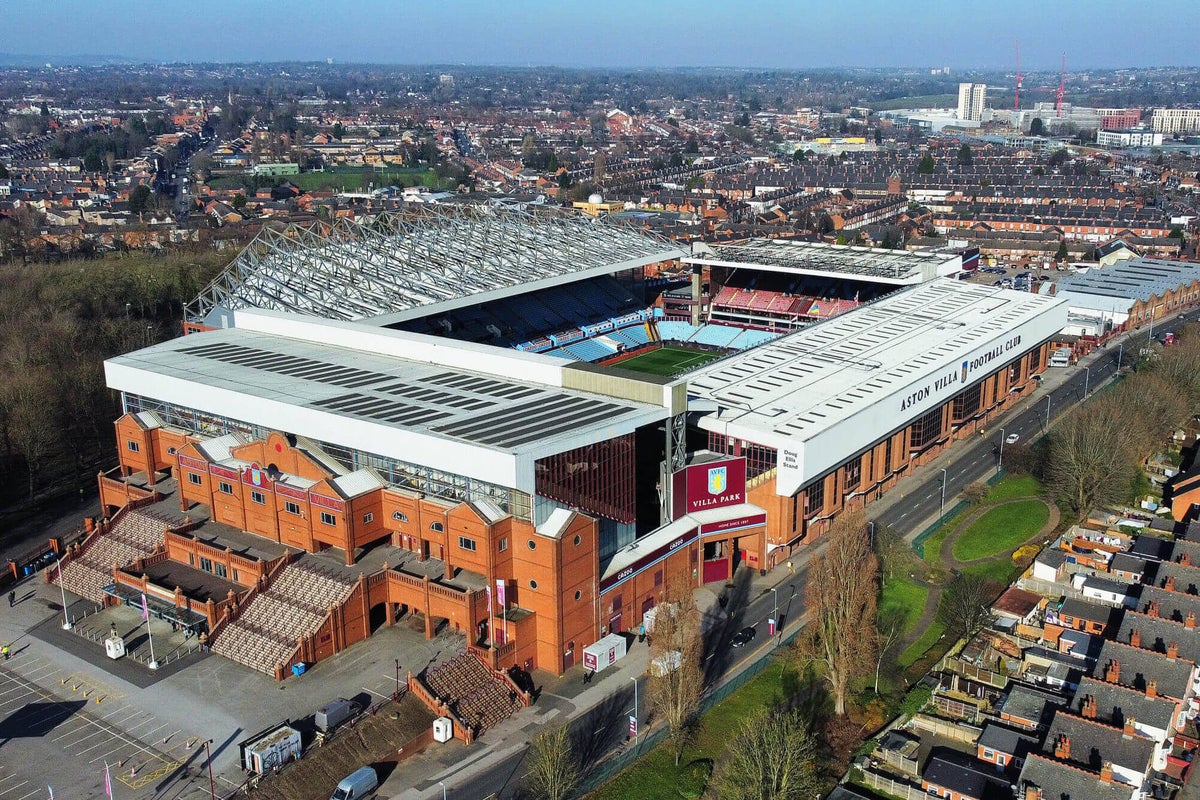
June 5 – Aston Villa have taken their first major step in the club’s ambitious stadium development projects, with Kingscote Construction officially breaking ground on the £100 million redevelopment of Villa Park’s historic North Stand.
This groundbreaking moment marks the beginning of a transformative era for one of English football’s most iconic venues. The project is central to Aston Villa’s long-term growth strategy and will significantly boost the North Stand’s capacity to more than 12,000 seats, pushing the overall capacity of Villa Park beyond the magical 50,000 mark.
It’s a race against time, with the club targeting completion ahead of the 2027/28 season to be fully ready for UEFA Euro 2028, when Villa Park is scheduled to host tournament matches as part of the UK and Ireland hosting bid.
From Historic Venue to Modern Powerhouse

Villa Park has been the beating heart of Aston Villa since 1897, witnessing countless legendary moments in the club’s rich history. But as the Premier League continues to evolve into a global commercial juggernaut, historic grounds like Villa Park must adapt to stay competitive. This £100m investment represents a bold leap forward while respecting the stadium’s heritage.
Designed by renowned Grimshaw Architects, the redevelopment follows an innovative “adapt and reuse” approach. Instead of a full demolition, the club will modernise and expand the existing North Stand structure. This sustainable method allows Aston Villa to preserve elements of the historic venue while delivering a state-of-the-art football experience.
The North Stand will be extended in multiple directions, featuring a new steel goalpost roof and updated cladding system. Enhancements will also extend to the adjacent Trinity Stand, creating a seamless, modernised bowl that elevates the entire matchday atmosphere.
Boosting Capacity and Fan Experience
Once completed, the expanded North Stand will add thousands of new seats, taking Villa Park’s total capacity comfortably over 50,000. This increase is crucial not just for Premier League and European matches, but also for positioning the stadium as a prime venue for major international tournaments like Euro 2028.
Supporters are set to benefit enormously from the changes. Plans include enhanced hospitality offerings, improved concourse facilities, better accessibility, and a fully modernised matchday experience. Fans can look forward to wider walkways, more premium seating options, and upgraded amenities that rival the best stadiums in Europe.
Beyond seating, the project includes approximately 500 square metres of upgraded first-team facilities. This encompasses brand-new changing rooms, advanced medical and physiotherapy areas, plus improvements to player warm-up and competition spaces. These enhancements will help attract and retain top talent as Aston Villa push to establish themselves as a consistent force in the Premier League and European competitions.
Economic Impact and Commercial Ambition
An expanded Villa Park will dramatically increase matchday revenue through higher ticket sales, premium hospitality packages, and expanded merchandising opportunities. As the club seeks to cement its status among the Premier League’s elite, this infrastructure boost is seen as essential for long-term financial sustainability and competitiveness.
The redevelopment is also expected to deliver wider economic benefits to the local Birmingham community, creating jobs during construction and positioning the stadium as a year-round destination for events, conferences, and entertainment.
Collaborative Effort: The Construction Powerhouse
Kingscote Construction is leading the redevelopment, working alongside several specialist companies from the Morrisroe Group. This includes Morrisroe Demolition, GSS Piling, Morrisroe Limited, Houston Cox, Piper Joinery, Kingscote Plant, Kingscote Design, and Kingscote Haulage.
Andy Beckett, Managing Director of Kingscote Construction, said: “The team ethos that drives success on the pitch is mirrored in our collective approach to delivering this transformation and state-of-the-art football stand. Breaking ground represents a momentous milestone for the club, its supporters, and for Kingscote Construction. We are proud to support the Europa League champions.”
Challenges and Timeline
The accelerated timeline means the North Stand will be closed for the entire 2026/27 season, temporarily reducing Villa Park’s capacity to around 37,000. While this presents a short-term challenge, the club views it as a necessary step to meet the Euro 2028 deadline and deliver a superior stadium in the long run.
Construction progress is already generating huge excitement among fans, with drone footage and updates showing significant early demolition and groundwork activity. The club has emphasised careful planning to minimise disruption while maximising efficiency.
What This Means for Aston Villa’s Future
This isn’t just about adding seats — it’s about transforming Villa Park into a world-class sports and entertainment venue that matches the club’s soaring ambitions on the pitch. Under progressive ownership, Aston Villa have returned to European football and are challenging for top honours. A bigger, better stadium completes the picture.
Fans have reacted with a mix of excitement and nostalgia. Many long-time supporters appreciate the balance between preserving history and embracing the future. Social media has been buzzing with renderings and predictions about how the new North Stand will look alongside the famous Holte End.
Industry experts believe the project could serve as a blueprint for other clubs looking to modernise historic grounds without losing their soul. Grimshaw’s design philosophy focuses on context-sensitive architecture that respects the surrounding Aston neighbourhood while delivering cutting-edge functionality.
Looking Ahead to Euro 2028 and Beyond
With Villa Park confirmed as one of the host venues for Euro 2028, the pressure is on to deliver. The expanded stadium will not only provide more seats for passionate home fans but also create an electric atmosphere capable of hosting the world’s best international teams.
Completion is targeted for August 2027, in time for the start of the 2027/28 Premier League season. Once finished, Villa Park will rank among the largest and most modern stadiums in the Premier League, helping Aston Villa compete with the financial heavyweights both domestically and in Europe.
As breaking ground marks day one of construction, the entire Aston Villa community — players, staff, supporters, and the city of Birmingham — stands ready to witness history in the making. Villa Park is changing forever, and the future looks brighter (and bigger) than ever. 🏟️