There is a familiar feeling creeping around Celtic Park again. The kind that supporters try to ignore at first, hoping it fades, hoping it fixes itself. But week after week, the same patterns have appeared, the same cracks exposed, the same uncomfortable questions asked.
For all the attacking talent, for all the moments of promise, there has been one glaring issue that refuses to go away. At the back, Celtic have looked vulnerable. Not occasionally. Not situationally. Consistently.
It is a stark contrast to what came before. Last season, the defensive unit was a foundation. Reliable, composed, almost predictable in the best way. This time around, it has been anything but. Goals have gone in too easily. Leads have felt fragile. Games that should have been controlled have turned chaotic.
And when a title race tightens, when every point carries weight, that instability becomes dangerous.
Much of that uncertainty has revolved around one absence. Cameron Carter-Vickers. Without him, the entire structure has felt different. Partnerships have changed, roles have shifted, and rhythm has been lost. It has forced constant adjustments, and in football, constant adjustments often mean constant problems.
The numbers tell the story. Celtic conceded just 26 league goals across the whole of last season. This time, they have already shipped 34. That is not a small drop off. That is a complete shift in identity.
Of course, context matters. A turbulent spell under Wilfried Nancy saw defensive discipline unravel quickly, with 12 goals conceded in just six league games. But even beyond that period, the sense remains that something is missing. Something fundamental.
And that is where the real conversation begins.
Because while the noise around the club has focused on results, on pressure, on the title race slipping into uncertainty, behind the scenes attention has already started to turn toward what comes next. Toward solutions. Toward reinforcements.
That brings us to a name that has quietly entered the frame.
Dundee defender Luke Graham.

At first glance, it feels like one of those moves that builds over time rather than explodes into headlines. But dig a little deeper, and the interest starts to make sense. Graham has been one of the standout performers in the Premiership this season. Consistent, composed, and already showing signs of being ready for a bigger stage.
Reports suggest Celtic are monitoring him closely, even if rivals Rangers may currently be further along in the race. A £1.5 million bid from Portsmouth earlier this year underlines the growing attention around him, and Dundee know exactly what they have.
A defender who wins his battles. Sixty five percent of his duels. Seventy percent in the air. Numbers that do not just look good on paper, but translate into reliability on the pitch.
And perhaps most telling of all is the comparison made by Dundee manager Steven Pressley.
“I worked with Jarrad Branthwaite during my time at Carlisle and I thought he was an exceptional young talent. I put Luke right up there next to him.
“Listen, I think he needs a number of steps still on his journey but there is no doubt, in my opinion, that Luke Graham can be playing in the English Premier League.”
That is not praise handed out lightly.
But here is where the story takes another turn. Because while Celtic are looking outward, there is also a growing sense they may already have something special developing from within.
Benjamin Arthur.

The 20 year old arrived quietly on loan from Brentford. No major noise, no huge expectations. At first, it looked like another player who might struggle for minutes. Another name lost in the shuffle.
Then came the opportunity.
And he took it.
Performances against Aberdeen, Motherwell, Rangers, and Dundee United have started to shift perception. Suddenly, he is not just a backup option. He is a contender. A presence.
Martin O’Neill has already hinted at his belief in the young defender, stating he “will be a player in time.” But the early signs suggest that time might be arriving sooner than expected.
Physically dominant. Six foot four. Comfortable on the ball. And statistically, already outperforming Graham in key areas, albeit across a smaller sample size. Eighty two percent of duels won. Eighty seven percent aerial success. A calmness in possession that stands out.
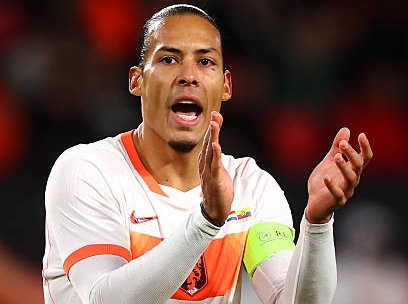
There is even a bold comparison lingering in the background. A “young Virgil van Dijk” label, previously mentioned by Pressley during his time working with Arthur.
Big words. Dangerous words, sometimes. But they speak to potential.
And that leaves Celtic at an interesting crossroads.
Do they invest in proven progression, bringing in someone like Graham to strengthen immediately? Or do they trust what is already emerging, backing Arthur to grow into that role and become something more?
Either way, one thing is clear. If Celtic are to rediscover control, stability, and ultimately success, the answers will not come from attack alone.
They will come from fixing what lies behind it.